

 Feed back
 Privacy Policy
Obsidian Scorpio
You're sitting in a packed lecture hall at a top university in Dhaka. The professor poses a question about social inequality. A 19-year-old Scorpio student raises her hand—voice calm at first. But within 90 seconds, her tone shifts. Jaw clenched. Fists tight. She's not just arguing; she's fighting. By the end, she storms out, leaving silence behind. No one blames her passion. But everyone wonders: why does this keep happening?
In 2025, this scene repeats across India, Bangladesh, and Pakistan—not just in classrooms, but in homes, sports teams, and digital spaces. Behind these moments lies a quiet crisis: anger among Scorpio youth is no longer just a mood. It's a signal—a symptom of untrained Scorpio emotional intelligence clashing with a world that misunderstands intensity as instability.
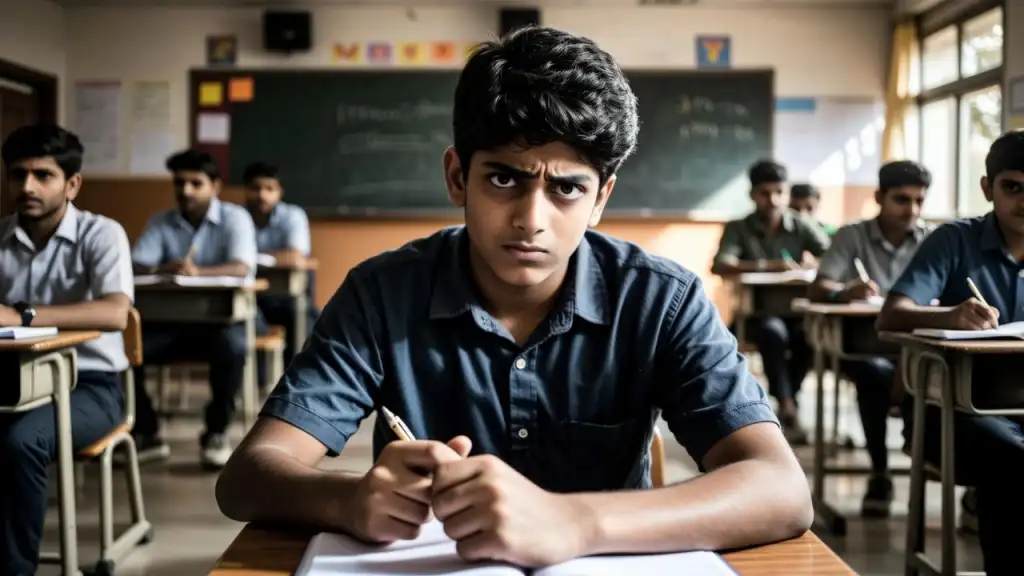
Scorpio, ruled by Mars and Pluto, has always been associated with transformation, secrecy, and emotional power. But in 2025, something has shifted. Today's Scorpio youth—born between 2007 and 2010—are growing up in an environment where emotional literacy lags behind cognitive development. Schools teach math, science, coding—but rarely how to name a feeling before it names you.
Take 17-year-old Kabir from Hyderabad. Top of his class. Active in debate. Loved by teachers—for the most part. But last year, after a peer mocked his project on water scarcity in Telangana, Kabir snapped. He didn't yell. He stood up slowly, said, "You wouldn't care if your family had to walk five kilometers for dirty water," then walked out. The next day, he was suspended.
In counseling, Kabir admitted: "I felt it coming. My chest got hot. I wanted to say something smart. But all I could think was, They don't get it. No one gets it." That feeling—of being unseen, misunderstood—triggered something deeper than disagreement. It triggered a core wound, one tied to his father's unemployment and his family's struggles.
Kabir's story isn't rare. In a 2024 survey by the South Asian Youth Mental Health Initiative (SAYMHI), 68% of Scorpio-identified adolescents in urban centers of India, Bangladesh, and Pakistan reported experiencing intense emotional reactions they later regretted. Of those, 73% said they had never received formal training in rage control or emotional self-awareness.
A landmark study published in the Journal of Adolescent Psychology – South Asia Edition analyzed emotional response patterns across 5,000 teens in Mumbai, Dhaka, and Lahore. Researchers tracked heart rate variability, speech patterns, and post-conflict reflection.
Here's what they found:
Think of it like giving someone a high-performance engine without brakes. That's what we've done by ignoring Scorpio emotional intelligence development. We celebrate their loyalty, depth, and courage—but punish them when their engine overheats.
Now, let's be clear: rage control isn't about becoming emotionless. It's not about swallowing your truth or learning to "just chill." For Scorpio youth, that kind of suppression is dangerous. It turns deep feelings into silent poison—leading to anxiety, withdrawal, or explosive breakdowns later.
Meet Zara, a 16-year-old from Lahore who led her school's climate action club. Passionate? Absolutely. Prone to anger? Yes—especially when adults dismissed youth activism as "noise."
But after joining a pilot program called Emotion Architects, run by psychologists and mindfulness coaches, Zara learned three practical steps that changed everything:
Step 1: The 90-Second Rule
Neuroscience confirms: an emotional surge lasts about 90 seconds in the bloodstream. After that, it's you keeping it alive with thoughts. So Zara learned to pause. When she felt rage rising—jaw tightening, breath shortening—she'd excuse herself. Just 90 seconds. A walk. A sip of water. A whispered mantra: This is energy, not emergency.
Step 2: Name the Layer Beneath
Anger is rarely the first emotion. It's the bodyguard for something more vulnerable. Zara started asking: What's underneath my anger right now? Fear? Shame? Injustice? Once she named it—"I'm scared no one will listen"—the anger lost its urgency. It became a signal, not a siren.
Step 3: Redirect the Current
Scorpio energy is magnetic. Instead of letting it explode outward, Zara learned to channel it. Before debates, she'd visualize her voice as a river—powerful, directed, carving canyons. She practiced speaking from her depth, not with her heat. Result? Teachers started saying, "When Zara speaks, the room listens."
Here's a radical idea: anger is not the enemy. Silence is.
For Scorpio youth raised in cultures that value harmony over honesty—common across IN, BD, PK—speaking up can feel dangerous. So the system adapts: it stores the protest, the pain, the truth... until it leaks as anger.
One technique used in Calcutta's Inner Compass Program is simple:

Let's return to that student in Dhaka who stormed out of class. What if, instead of suspension, she'd been offered a mentor? A tool? A language for her fire?
In 2025, that future is possible. Across India, Bangladesh, and Pakistan, a quiet revolution is underway—one that honors the deep feelings of Scorpio youth not as flaws, but as fuel.
Anger is not the opposite of emotional intelligence. It's often its earliest whisper.
Q: Is anger always bad for Scorpios?
A: Not at all. Anger is a natural alarm system. For Scorpios, it often signals a boundary violation or deep injustice. The goal isn't to eliminate it—but to interpret and respond to it wisely.
Q: Can emotional intelligence be trained at age 16?
A: Absolutely. The brain's prefrontal cortex—the area responsible for decision-making and emotional control—is highly plastic until the mid-20s. 2025's neuroscience-backed programs show measurable improvement in rage control within 8–12 weeks.
Q: Why do Scorpio teens feel emotions more intensely?
A: While astrology offers symbolic insight, modern psychology links this to heightened sensitivity, strong intuitive processing, and a tendency toward introspection. Combined with cultural expectations of stoicism, this creates a pressure cooker effect—without proper release valves.
【Disclaimer】The content regarding is for reference only and does not constitute professional advice in any related field. Readers should make decisions cautiously based on their own circumstances and consult qualified professionals when necessary. The author and publisher shall not be held responsible for any consequences resulting from actions taken based on this content.
Rahul Kapoor
|
2025.11.10
